About Us
What we do
The New Humanitarian is an independent, non-profit newsroom that believes in journalism as a force for good. We produce fact-based journalism from the heart of conflicts and disasters to build understanding of how to improve the lives of the millions of people affected by humanitarian crises around the world.
Who we are
The New Humanitarian (formerly IRIN News) was founded by the United Nations in 1995, in the wake of the Rwandan genocide, out of the conviction that objective on-the-ground reporting of humanitarian crises could help mitigate or even prevent future disasters of that magnitude.
Almost twenty years later, we became an independent non-profit news orgheanisation, allowing us to cast a more critical eye over the multibillion-dollar emergency aid industry and draw attention to its failures at a time of unprecedented humanitarian need. As digital disinformation went global, and mainstream media retreated from many international crisis zones, our field-based, high-quality journalism filled even more of a gap. Today, we are one of only a handful of newsrooms world-wide specialised in covering crises and disasters – and in holding the aid industry accountable.
Why our work counts
The number of people to whom the UN delivers aid has more than tripled over the past decade. Climate change, population growth, volatile markets, water scarcity, sectarianism and the burgeoning of armed groups and extremists are pushing more and more communities to the edge. The unprecedented number of concurrent emergencies has exposed serious weaknesses in the current international emergency aid apparatus: financing is unsustainable; local communities do not have enough of a voice; and needs are not adequately met. It is a critical time of change for the multi-billion-dollar international humanitarian sector, which is under pressure to reform the way aid is delivered.
New challenges; a new name and brand identity
It’s in this context that in 2019, we changed our name from IRIN to The New Humanitarian to signal our move from UN project to independent newsroom and our role chronicling the changing nature of – and response to – humanitarian crises.
The New Humanitarian speaks to the profound shifts impacting our world today.
The drivers of humanitarian needs are changing, thanks to new threats like climate change, longer-lasting conflicts, and a geopolitical landscape that makes the resolution of crises at the international level more challenging.
The impacts of humanitarian crises are changing too, becoming more global in their repercussions. The exodus of refugees from Syria is one of many examples.
Traditional forms of humanitarian intervention are bursting at the seams; new approaches and players are emerging to fill an increasing gap between needs and response.
Tackling the world’s crises is no longer the exclusive domain of governments, “Big Aid” and the United Nations -- nor is it only about disaster relief and aid delivery. In many ways, the whole conception of humanitarianism is changing, evidenced by the private sector’s response to refugees; high school students marching for climate change; and local communities reclaiming agency in shaping their own futures. Today, a new generation of humanitarians is redefining the way the world responds to crises – demanding a seat at the table and a voice in the conversation.
We remain the trusted news source for policy-makers and practitioners in humanitarian response, but The New Humanitarian is expanding to reach this wider audience of people who want to better understand our complex world, in order to change it for the better.
Our strategy
The current journalistic model is broken: audiences are demanding that the hierarchical, elite-led system of news gathering and presentation behind journalism be dismantled in favour of a more inclusive and holistic approach based on more equitable access to information and more nuanced and multi-perspective narratives.
There is a growing demand for decolonised, meaningful participatory media spaces – with different power dynamics - and an increasing expectation of journalism as a constructive force for good, rather than simply an “objective” chronicler of the news.
The business model for media is also broken, with many media going bankrupt during the pandemic - despite their information being more valuable than ever - because of a dependence on advertisers.
Finally, exploitative and extractive practices have long been commonplace in media and other businesses.
We think there is a better way. We want to build something different.
Thus, we will continue to produce journalism that can compete with the world's most respected publications, but we will chart our own path in defining what a progressive transformative newsroom means to us.
Our strategy sees us creating that transformation in the following ways:
- challenging the power structures within journalism, especially how stories are told and who sets the narrative;
- intentionally pursuing impact as central to the production of our journalism;
- bolstering our ability to pursue the most challenging stories;
- developing a viable model of mission-driven journalism on the international stage
- building a progressive newsroom culture.
How we work
Working with on-the-ground correspondents in dozens of countries and analysts and editors with intimate knowledge of the sector, The New Humanitarian reports from the heart of humanitarian crises and global policy and donor hubs. Our reporting informs humanitarian need and response, amplifies the voices of those on the ground and holds the sector accountable to itself, its funders and the communities it serves.
Our coverage takes a holistic view of humanitarian crises, from emerging conflicts to the human face of climate change, from refugee movements to disease outbreaks. We also cover the policy and practice of humanitarian response, from local responders to the particular needs of women and girls to the responsible use of technology and data to the financing of aid work. We are there before, during and after; providing early warning when a crisis is brewing and sticking around long after most camera crews have packed up and left. We are committed to keeping neglected crises in the media spotlight and on the policy agenda. Our work always includes a multiplicity of voices, first and foremost those on the ground, be they people whose lives are uprooted or those trying to help.
In addition to our daily multimedia news reports, we curate in-depth topical collections of our coverage and feature diverse voices in opinion essays, Q&As and interviews. We highlight our work in newsletters, webinars and special events.
Our coverage of the threats facing women and girls in crisis zones
At the #EndSGBVOslo conference held in 2019, The New Humanitarian made a pledge that outlines our commitment as a newsroom to contributing to ending sexual and gender-based violence(SGBV)in humanitarian crises.
Women and girls form a focus of The New Humanitarian's reporting from the frontlines of humanitarian crises, providing a platform through which they can tell their stories.
We commit to:
- Creating a better understanding of the unique needs of women and girls in humanitarian crises.
- Amplifying the voices of women, not only as victims but as agents of change.
- Avoiding sensational reporting that robs women and girls of their dignity.
- Documenting sexual abuse and gender-based violence in conflict areas and other crisis zones.
- Holding governments, peacekeepers, and aid agencies to account for violations of – or failure to protect – women’s rights.
The New Humanitarian will offer in-depth reporting and analysis that highlights ways the international community can be more responsive to the unique needs of women and girls in humanitarian crises. Coverage topics may include rape as a weapon or war and access to access to sexual and reproductive healthcare in crises.
Interested in working with us?
At The New Humanitarian, the humanitarian imperative comes first. We strive to respect the following values:
In the pursuit of the truth, we focus on:
- Independence: Our reporting will always remain in the public interest, and will not be influenced by donors, advertisers, governments, multilateral organisations or any other special interests. We will report on aid priorities based on need, and will not be driven by any political, religious, security or corporate advocacy agenda.
- Courage: We will ask tough questions, push the limits and will not be afraid to challenge dominant narratives or powers.
- Trustworthiness: Our work will be meticulously researched, our analysis insightful, and our foresight of future trends reliable. We welcome our readers holding us to account for our accuracy.
In our work, we choose:
- Constructiveness: We will go beyond predictable narratives and received wisdoms with a view to increasing understanding.
- Humanity: We will help people understand and relate to one another, recognising the common humanity between people.
In the voices we amplify, we seek out:
- Authenticity: We will seek out the views of those most affected by crises, who have agency and can speak for themselves.
- Diversity: We will ensure that all voices are heard equally – women and girls as loudly as men and boys, established humanitarian players as often as local and independent initiatives.
Our funding
The New Humanitarian is an independent non-profit newsroom with a mission to put journalism at the service of people affected by humanitarian crises around the world.
We strive to ensure diversity in the sources of our funding and revenue in order to maintain our editorial independence (actual and perceived) and our long-term financial sustainability.
We seek to ensure that no individual donor or financial contribution exceeds 25 percent of our overall budget.
Our funding comes from a mix of governments, foundations, readers, and more. When considering whether to solicit or accept funding or revenue, we make certain considerations. We strive to ensure diversity in the sources of our funding and revenue in order to maintain our editorial independence (actual and perceived) and our long-term financial sustainability. Read more about our Principles for accepting financial contributions, which we ask our donors to agree to.
Current partners include:
Australia's Department of Foreign Affairs and Trade (DFAT) Australia's Department of Foreign Affairs and Trade is responsible for leading the Australian Government’s response to international humanitarian crises. Their policy is designed to save lives, alleviate suffering and maintain human dignity during and in the aftermath of conflict, disasters and other humanitarian crises, as well as to prevent and strengthen preparedness for the occurrence of such situations.
Belgium's Federal Public Service of Foreign Affairs (FPS Foreign Affairs) The government of Belgium's Directorate-general for Development Cooperation and Humanitarian Aid works with its partners to construct a just, fair and sustainable world in which each person can live in peace, safety and freedom and protected from poverty; to remain a leading stakeholder by subscribing to the international agenda for development cooperation and be an effective stakeholder focused on results-based action; and to appropriately and proactively manage human potential in order to improve staff fulfilment and commitment.
Bill & Melinda Gates Foundation The Bill & Melinda Gates Foundation, guided by the belief that every life has equal value, is working to help people lead healthy, productive lives, focused on health, poverty, and opportunity. Based in Seattle, the foundation supports work in more than 100 countries.
Canton of Geneva Through its Service de la Solidarité Internationale, the state of Geneva strives to promote sustainable development in order to contribute to the fight against poverty in less developed nations and to take action to tackle socio-economic inequalities, discrimination and exclusion.
The David and Lucile Packard Foundation The David and Lucile Packard Foundation is a private family foundation created in 1964 by David Packard (1912–1996), cofounder of the Hewlett-Packard Company, and Lucile Salter Packard (1914–1987). For over 50 years, the Foundation has worked with partners around the world to improve the lives of children, families, and communities—and to restore and protect our planet.
Ministry of Foreign Affairs of Denmark The vision for Denmark’s development cooperation is a more secure and sustainable world free from poverty, based on international binding cooperation as well as just and resilient societies that fight inequality and create hope and future opportunities for the individual, with the UN Sustainable Development Goals and the Paris Agreement as beacons.
Foreign, Commonwealth and Development Office The Foreign, Commonwealth and Development Office (FCDO) pursues the UK's national interests and projects it as a force for good in the world. The FDCO promotes the interests of British citizens, safeguards the UK’s security, defends its values, reduces poverty and tackles global challenges with its international partners.
Global Affairs Canada As a recognised leader in humanitarian assistance, Canada works with other actors in the international humanitarian system to save lives, alleviate suffering and maintain the human dignity of those affected by crises. Through its Feminist International Assistance Policy, Canada supports gender-responsive humanitarian action to better address the needs of women and girls, and other vulnerable groups, affected by crises and to promote their empowerment and agency. Canada believes that gender-responsive humanitarian action is critical towards reducing poverty and building a more peaceful, inclusive and prosperous world.
Humanity United Humanity United is a foundation dedicated to cultivating the conditions for enduring freedom and peace. They support and build efforts to transform the systems that contribute to human exploitation and violent conflict. HU is part of The Omidyar Group, a diverse collection of organisations, each guided by its own approach but united by a common desire to catalyse social impact.
IKEA Foundation The IKEA Foundation (Stichting IKEA Foundation) works to create a better everyday life for the many people. They focus on improving the lives of vulnerable children by enabling their families to create sustainable livelihoods, and to fight and cope with climate change.
Norway's Ministry of Foreign Affairs An important part of Norwegian foreign and international development policy is concerned with saving lives, alleviating suffering and protecting civilians affected by war and conflict. Norwegian humanitarian efforts are focused on countries where there are great, unmet humanitarian needs, where Norway is particularly well placed to make a contribution, or where the measures concerned support peace and reconciliation processes.
Open Society Foundations (OSF) The Open Society Foundations work to build vibrant and tolerant democracies whose governments are accountable to their citizens. Through their work, they seek to strengthen the rule of law; respect for human rights, minorities, and a diversity of opinions; democratically elected governments; and a civil society that helps keep government power in check.
Patrick J. McGovern Foundation The Patrick J. McGovern Foundation is a global 21st century philanthropy bridging the frontiers of artificial intelligence, data science and social impact to create a thriving, equitable and sustainable future for all. The Foundation’s work focuses on bringing together academia, practitioners, and civil society to pursue the potential of AI and data science to address some of the world’s most urgent challenges.
Stichting Vluchteling As a humanitarian organisation, Stichting Vluchteling (the Netherlands Refugee Foundation) has been providing assistance to refugees and displaced people since 1976. In acute emergencies they provide life-saving emergency aid in the form of shelter, medical care, food, and clean water, but they also provide longer term aid such as education.
Sweden's International Development Cooperation Agency (Sida) Sida is a government agency working on behalf of the Swedish parliament and government, with the mission to reduce poverty in the world. Through their work and in cooperation with others, Sida contributes to implementing Sweden’s Policy for Global Development (PGU).
Switzerland's Federal Department of Foreign Affairs (FDFA) Switzerland's Federal Department of Foreign Affairs forms and coordinates Swiss foreign policy on behalf of the Federal Council, pursues foreign policy objectives, safeguards the interests of Switzerland and promotes Swiss values. Through its foreign policy, Switzerland plays its part in alleviating need and poverty in the world, while promoting respect for human rights and democracy, and contributing to the peaceful coexistence of peoples and the conservation of natural resources.
Wellspring Philanthropic Fund Wellspring Philanthropic Fund supports the realisation of human rights and social and economic justice for all people. Their work is rooted in respect for the dignity and worth of every human being, and their approach is focused on people who have historically been systematically deprived of voice and power.
Membership In 2020, we launched a voluntary membership programme for our readers in order to enhance our financial stability and foster a community amongst our readers. Outside of membership, interested readers may also donate to us as well.
Our audience
We deliver content designed with a specialist audience in mind, but accessible enough for the interested, globally-minded public.
Our coverage informs the work of those who seek to prevent or respond to humanitarian crises at local, national, or international levels. They include policy-makers, aid practitioners, researchers and educators.
We also strive to be a source for a new generation of global citizens who want to help make the world a better place, from corporate leaders to climate scientists to your next-door neighbours.
Finally, we serve as a reference for mainstream media, who turn to The New Humanitarian for a reliable source of information and ideas about the humanitarian world, and cite and republish our work.
Our most recent audience survey was conducted in 2022, with results published in December. Read highlights of the results here.
Our impact
The New Humanitarian contributes to more effective and accountable humanitarian action to improve the lives of people affected by crises. We do so in three ways:
- Our journalism informs decision-makers and practitioners in humanitarian aid and related sectors, by painting an accurate picture of the realities on the ground, sounding the alarm on brewing crises, and providing deeper and more informed reporting than is often available in mainstream media. Our stories have directly instigated, influenced and informed action. The New Humanitarian’s reporting on the Yazidi healthcare crisis in 2018 prompted help from as far and wide as the UN migration agency, Doctors Without Borders, the International Medical Corps and British charity Swinfen Telemedicine. In 2016, we highlighted the humanitarian community’s lack of preparedness to respond to flows of people fleeing the battle against so-called Islamic State in Mosul, Iraq.
- Our journalism acts as a catalyst for policy change in a humanitarian aid sector that has few independent voices of critique and analysis. By challenging dominant narratives and exposing inconsistencies, corruption and system failures, The New Humanitarian’s stories lead to concrete changes. Our reports have forced governments to reluctantly admit to humanitarian crises and allow aid, and exposed financial and sex abuse scandals within the United Nations and international NGOs. We have been invited to testify before parliament, brief government agencies, speak to university students, and present our findings around the world.
- Our journalism raises awareness among engaged general publics. Today, a new generation of humanitarians is redefining the way the world responds to crises; from high school students marching for climate change; and local communities reclaiming agency in shaping their own futures. By helping global audiences understand how and why crises happen and what can be done, The New Humanitarian contributes to an informed and empathetic global citizenry that can mobilise, pressure government, and resist sensational, superficial narratives on everything from climate change to refugees. Our reporting has prompted public petitions, donations and charity initiatives, new aid programmes, debates in local parliament and changes in policy. Our stories are referenced and republished in publications ranging from the New York Times to the BBC to Al Jazeera and France 24.
You can find further detail and examples of our impact in our Annual Reports.
Our awards
2024
- One World Media Awards. Art in time of crisis: Drawing Derna by Zainab Chamoun was longlisted in the Environemtnal Reporting Award. Also with a nod, TNH fellow Zubaida Baba Ibrahim's piece, Money clubs help displaced Nigerians create their own safety nets, was longlisted in the Women's Solutions category. Finally, Arlette Bashizi was longlisted for the New Voice Award, for her reporting on displacement in the Democratric Republic of Congo.
2023
- One World Media Awards. WhatsApp, Lebanon? and How one small Syrian NGO is tackling period poverty, one pad at a time were longlisted for the One World Media Awards in the Digital Media and Women's Solutions Reporting categories, respectively.
- Geneva Engage Awards. The New Humanitarian picked up an award at this year’s Geneva Engage Awards in recognition of our outreach and engagement across social media. Accepting the award, Sarah Noble, Director of External Relations, highlighted the importance of storytelling in the way we use digital channels.
- 2023 Elisabeth B. Weintz Humanitarian Award. The Harvard Humanitarian Initiative (HHI) selected The New Humanitarian as the 2023 HHI Elisabeth B. Weintz Humanitarian Award recipient. CEO Heba Aly accepted the award during an online ceremony on 11 May. For the first time, HHI nominated an institution instead of an individual to acknowledge The New Humanitarian’s remarkable contribution as a leading trusted news source for policy-makers and practitioners in humanitarian response.
- Hostwriter Prize. Makepeace Sitlhou and Ninglun Hanghal won the prestigious European Hostwriter prize for their story on refugee doctors working along the India-Myanmar border. The story was also shortlisted for the Mumbai Press Club's RedInk Awards.
2022
- One World Media Awards. I am a Leader of my House by Sabiha Faiz, Fahmida Azim, Sara Wong, and Irwin Loy, and Lebanese Women Fight Period Poverty with eco-friendly alternatives by Zainab Chamoun were both longlisted for the One World Media Awards Women's Solution Reporting Award.
- WhatsApp, Lebanon? was longlisted for the Information is Beautiful Awards 2022.
2021
- UN Correspondents Association. Eric Reidy, our Staff Editor & Reporter, Migration & Special Coverage, won the UN Correspondents Association Elizabeth Neuffer Memorial Prize for his reporting on the impact of COVID-19 on migrants and refugees.
- Fetisov Journalism Awards. Shortlisted for the 2021 Fetisov Journalism Awards are Bangladesh's Hidden Climate Crisis by Zakir Hossain Chowdhury and Robert Flummerfelt, Nellie Peyton, and Ange Kasongo’s investigation into sex abuse by aid workers in DRC.
- Covering Climate Now Journalism Awards. Bangladesh's Hidden Climate Crisis by Zakir Hossain Chowdhury was longlisted for the Covering Climate Now Journalism Awards.
- One World Media Awards. What happens to migrants forcibly returned to Libya? by Mat Nashed was longlisted in the Refugee Reporting category for the One World Media Awards.
- True Story Award. How coronavirus hit Aden: A Yemeni doctor’s diary was nominated for the final round of the True Story Award, along with a submission by Safina Nabi that included the TNH piece Nowhere to turn for women facing violence in Kashmir.
2020
- One World Media Awards. How coronavirus hit Aden: A Yemeni doctor’s diary won the One World Media Coronavirus Reporting Award. Our in-depth The Sahel in flames package and In Syria’s latest exodus, local citizens become frontline aid workers by Sofia Barbarani were both longlisted for One World Media Awards.
- The Society of Publishers in Asia 2020 Awards. Verena Hölzl's story, Male rape survivors go uncounted in Rohingya camps, has been named a finalist under Global Excellence in Human Rights Reporting.
- Society of Environmental Journalists Awards. Our popular Drought Diaries series took third place in the Outstanding Explanatory Reporting category.
2019
- UN Correspondents Association Awards. Regular contributor Abu Anas in Bangladesh wins the top prize in the climate change category of the UN Correspondents Association Awards with his reporting for TNH.
- Forum on the Arms Trade. Regular contributor Paula Dupraz-Dobias is recognised by the Forum on the Arms Trade for her exemplary reporting on the attention given to gender-based violence at the most recent annual conference of the Arms Trade Treaty (ATT) held in Geneva.
- One World Media Awards. The series "Destination Europe" and "How Climate Change is Plunging Senegal's Herders into Poverty" are longlisted for a Refugee Reporting Award and Environmental Reporting Award respectively.
- James Foley Award for Conflict Reporting. Regular contributor for Latin America Tomás Ayuso is the fifth recipient of the James Foley Award, which honours digital journalists who produce exceptional reporting under the most challenging conditions.
2018
- Global Media Competition on Labour Migration. “How weavers in Burkina Faso are now on Europe’s migration front line”, by Sarah Haaij and Saskia Houttuin, wins one of four awards from the International Labour Organization’s Global Media Competition on Labour Migration.
- Migration Media Awards. Our film "Welcome to Refugee Purgatory on the Hungary Border", by Jaime Alekos, wins first place in the English video category for the Migration Media Awards.
- Pictures of the Year International competition, Donald W. Reynolds Journalism Institute. Our film "Welcome to Refugee Purgatory on the Hungary Border", by Jaime Alekos, wins an Award of Excellence in the Category for Multimedia News & Issue Reporting Story in the Pictures of the Year International competition.
- One World Media Awards "We are not the world: Inside the 'perfect storm' of famine" is longlisted for a Popular Features Award at the One World Media Awards.
- Kurt Schork Memorial Awards Regular contributors Sally Hayden and Tom Westcott are finalists in the 2018 Freelance category at the Kurt Schork Memorial Awards, Hayden for her reporting on Sudan and Westcott for her work from Iraq.
2017
- UNCA Awards Former Asia Editor Jared Ferrie wins a joint silver medal by the United Nations Correspondents Association in the Elizabeth Neuffer Memorial Prize for written media.
- Frontline Club Awards Our investigation "Who pays the hidden price for Congo’s conflict-free minerals?", by Emmanuel Freudenthal, wins a special mention at the Frontline Club Awards.
- Society of Publishers in Asia (SOPA) Awards Our film "Why this Indonesian fisherman risked it all", by Florian Kunert, wins an award for Excellence in Video Reporting and our feature "Myanmar says Rohingya rape and abuse allegations “made-up”, despite mounting evidence", by Jared Ferrie, wins an honourable mention for Excellence in Human Rights Reporting at the SOPA Awards.
- One World Media Awards Our film “Who in the world is Millie Wonder?”, by Miranda Grant, is shortlisted for the One World Media Women’s Rights in Africa Award.
- Carleton University's most inspiring alumni CEO Heba Aly was recognised as one of the seventy-five most inspiring alumni of her alma mater’s Faculty of Public Affairs, in honour of Carleton University's 75th anniversary.
- University of Notre Dame’s Kroc Institute for International Peace Studies Our Editor-at-Large Obi Anyadike is awarded the 2017 Distinguished Alumni Award from his alma mater.
2016
- National Press Photographer's Association (NPPA) Quarterly Multimedia Contest Our multimedia feature “Blue Nile – Sudan’s Forgotten Front”, by Amanda Sperber, Ashley Hamer, Alex Pritz, Will Miller, and Ross Martin, wins second place at the NPPA Quarterly Multimedia Contest.
- Amnesty International Media Award Our multimedia feature “Blue Nile – Sudan’s Forgotten Front”, by Amanda Sperber, Ashley Hamer, Alex Pritz, Will Miller, and Ross Martin, is shortlisted ath the Amnesty International Media Award.
- AidEx Humanitarian and Development Journalism Awards Our photo feature "Rocky Road: Disabled refugees battle through the Balkans", by Jodi Hilton, is shortlisted for a photojournalism award at the AidEx Humanitarian and Development Journalism Awards.
2015
- ALNAP State of the Humanitarian System Photo Competition Our freelancer Eleonora Vio wins the ALNAP State of the Humanitarian System Photo Competition for her photo of refugees arriving on a Greek beach.
- AidEx Humanitarian and Development Journalism Awards The New Humanitarian is nominated for three AidEx Humanitarian and Development Journalism Awards in the photojournalism and reporting categories.
- One World Media Award Our film “War on Women”, by Dearbhla Glynn, is shortlisted for the One World Media Women’s Rights in Africa Award.
- International Labour Organization's 'Reporting Fairly on Labour Migration' media competition Our article "Are SE Asia’s trafficking kingpins getting off the hook?", by Mubashar Hasan, is shortlisted in the top 20 entries received.
- United Nations Foundation Global Issues Press Fellowship Our New York correspondent Philippa Garson is awarded a fellowship.
- We are the City - Rising stars 2015 Our former Outreach Manager, Tamara Leigh wins "rising star" in the media & journalism category at the We are the City Rising Star awards.
News and Events
For details of our upcoming events and organisational developments, including new partnerships, awards, new hires and more, check out our What’s new? page.
Our board
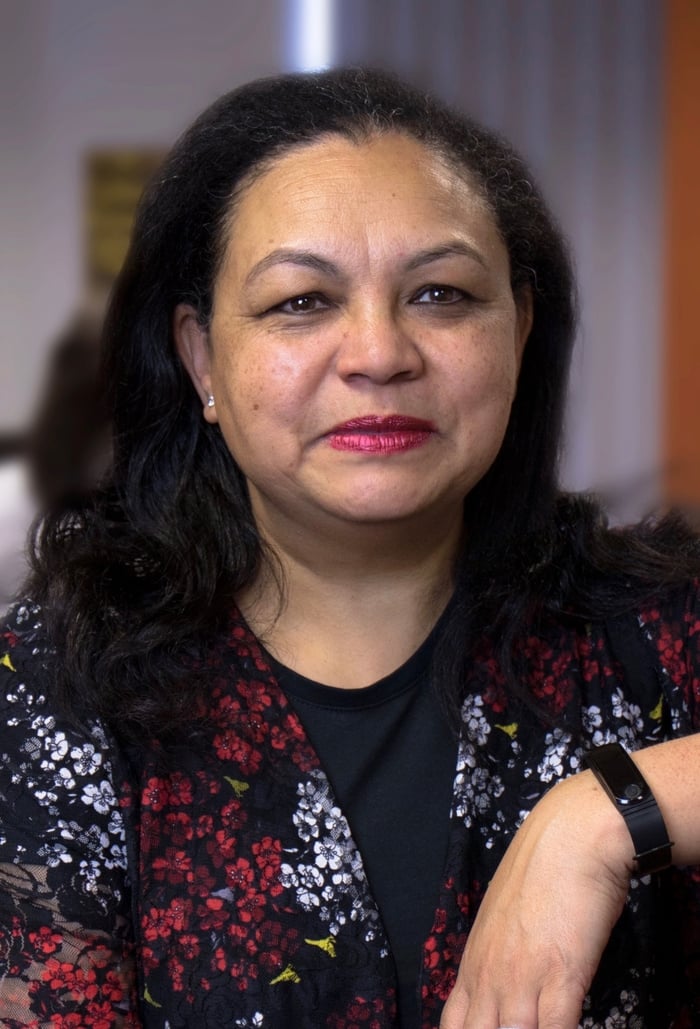
Paula Fray, President
Founder and Managing Director, frayintermedia
Ms. Fray has worked in media for more than three decades as a journalist, editor, trainer and media manager. An award-winning journalist, Ms. Fray was the first female editor of the South African Saturday Star newspaper. A recipient of the prestigious Nieman Fellowship at Harvard University, she is a former member of the Nieman Foundation Advisory Board at Harvard University. In 2005, she started Paula Fray and Associates (now frayintermedia) before joining Inter Press Service (IPS) as Africa regional director in 2008. As regional head, she oversaw the operations of the international development news agency. She was a trustee of Brand South Africa until March 2016 and is a trustee of Media Monitoring Africa. She has wide-ranging consultancy and project management experience and has served as a mentor for organisations such as Health-e and the Media Development and Diversity Agency (MDDA). Ms. Fray graduated with a BJourn degree from Rhodes University and has a Women and Law Certificate from UNISA.

Dominique Ben Dhaou, Member
Founder & Managing Director, PointNorth International
Ms. Ben Dhaou has been working in Human Resources leadership roles in international organisations for more than 30 years and has experience in 12 different industries across continents. As the Founder and Managing Director of PointNorth International, she helps professionals and executives reinvent a career that truly fits their experience, values, skills and purpose. She is also a strategic and human capital adviser for executives. In 2016 and 2017, Ms. Ben Dhaou was recognised with the Lifetime Achievement Award and Top Professional in Human Resources award by the International Association of Top Professionals.

Hayley Nelson, Member
Global Head of Marketing, B2B, Logitech, United States
Ms. Nelson brings 25 years of insights in the business side of media and skills in technology, media marketing, and innovation. She has helped both start-ups and big companies alike navigate digital disruption, transforming their approach to publishing and their relationship with their audience. Vice President of Content Marketing at Salesforce since July 2019, Ms. Nelson has led innovation efforts in product development and marketing at various companies: She leads the global brand editorial strategy at Salesforce, created a content marketing approach for Airbnb, led digital innovation efforts at The New York Times, and built an award-winning digital team at Wired Magazine. Ms. Nelson is a frequent speaker on media, marketing, and innovation, and an adviser to start-up founders and CEOs. She holds an MBA in Strategic Management from Wharton School of Business, a master’s degree in Economics and International Affairs from Johns Hopkins University, and a bachelor’s degree in History from Northwestern University.

Dr. Joanne Liu, Member
Former International President of Médecins Sans Frontières (MSF)
Dr. Joanne Liu is a Canadian paediatrician and former International President of Médecins Sans Frontières (MSF). Dr. Liu is currently practicing as a doctor in Canada during the COVID-19 response, and is a member of the independent panel examining how the World Health Organization and countries handled the COVID-19 pandemic. She is an Associate Professor at the Université de Montréal, Professor in Practice at McGill University, and has also taught at Fudan University in Shanghai. Dr. Liu began working with MSF in 1996 and has responded to humanitarian and health emergencies in Central Africa, Middle East and Central Asia mostly. She helped create the telemedicine project, which connects MSF physicians in 150 remote sites with a pool of more than 300 medical specialists across the globe, and helped develop one of the first programmes offering comprehensive medical care for survivors of sexual violence in Republic of Congo. She trained at McGill University School of Medicine in Montreal and holds a Fellowship in Paediatric Emergency Medicine from New York University School of Medicine as well as an International Master’s in Health Leadership, also from McGill University.
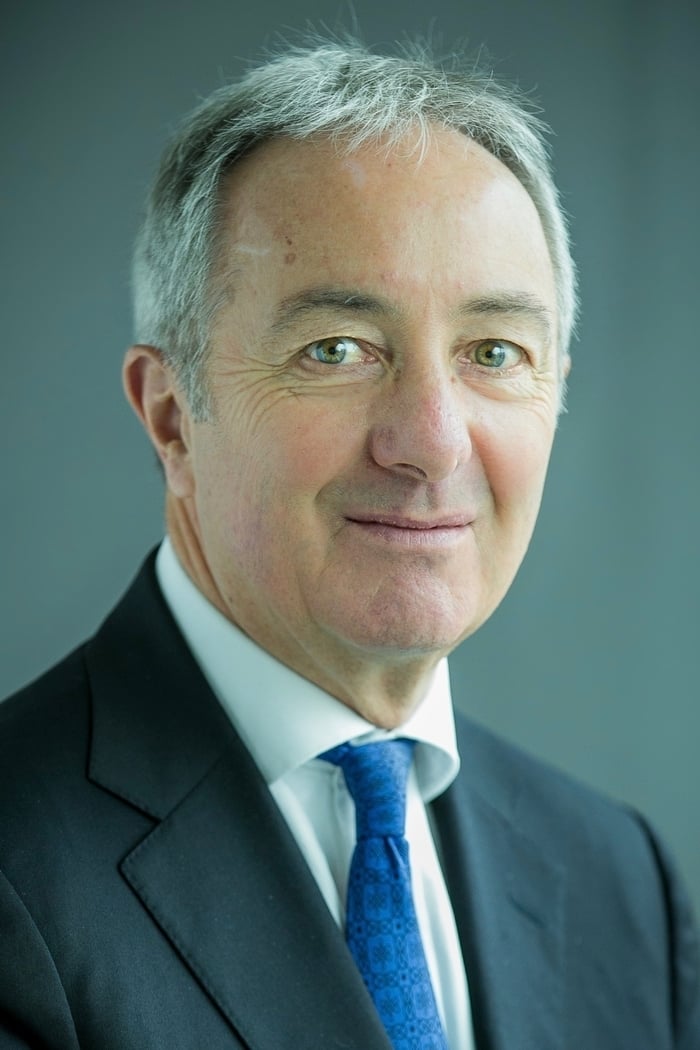
Martin Aked, Treasurer
Chartered Accountant, CPA charterholder, business consultant
After retiring from a long career at PwC, Mr. Aked served as Treasurer of the board of MSF International and currently sits on the boards of the global peacebuilding organisation Interpeace and the audit committee of WorldWildlife Fund International, all three non-profits based in or near Geneva. He is well-versed in strategic governance and finance issues, in which he also continues to provide services on a commercial basis.
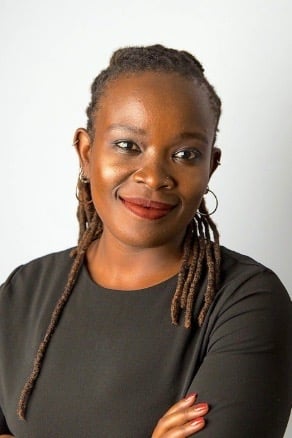
Nanjira Sambuli, Member
Fellow in the Technology and International Affairs Program at the Carnegie Endowment for International Peace
Nanjira Sambuli is a researcher, policy analyst and strategist interested in and working on understanding the unfolding, gendered impacts of ICT adoption on governance, diplomacy, media, entrepreneurship and culture. Ms. Sambuli is a Fellow in the Technology and International Affairs Program at The Carnegie Endowment for International Peace, and a Ford Global Fellow. She is also a co-Chair of Transform Health, and board member at The New Humanitarian, Development Gateway, and Digital Impact Alliance. Ms. Sambuli advises the Carnegie Council’s AI and Equality Initiative and the <A+> Alliance for Inclusive Algorithms. She is a member of the Gender Advisory Board at the UN Commission on Science and Technology for Development (CSTD). She is also a Diplomacy Moderator at the Geneva Science and Diplomacy Anticipator (GESDA). Ms. Sambuli served as a Commissioner on the Lancet & Financial Times Governing Health Futures 2030 Commission, as a panel member on the United Nations Secretary General’s High-Level Panel on Digital Cooperation, and as a deputy on the United Nations Secretary General’s High-Level Panel for Women’s Economic Empowerment.

Paula Escobar-Chavarría, Member
Professor, Universidad Diego Portales
Ms. Escobar-Chavarría is currently a columnist and panellist at La Tercera, CNN Chile, and Duna radio; a professor at Universidad Diego Portales, where she is Executive Director of the Chair on Women and Media; a board member of the World Economic Forum’s Young Global Leaders foundation; a board member of Comunidad Mujer, a non-profit that promotes women’s rights; and a board member of Educación2020, an NGO that works to make education the first priority in Chile. Ms. Escobar-Chavarría has published eight non-fiction books, including one in which she interviewed all the Chilean presidents since the return of democracy. She is the former Magazines Editor at El Mercurio, a major newspaper in Chile; the former Editor-in-Chief of Caras magazine; and the former Editorial Director of Televisa Group in Chile. She was named a Young Global Leader in 2006 by the World Economic Forum, and a Yale World Fellow in 2012. She won the Lenka Franulic award for the best woman journalist in Chile in 2014, and was chosen as one of the BBC 100 Inspiring women of 2015. In 2019, she and her team won the UAH Excellence in Journalism Award in print media in Chile for their coverage of sexual misconduct and abuse. In 2020, she was elected a Poynter Fellow.

Sacha Meuter, Secretary
Head of Policy and Research, Legal Advisor, Fondation Hirondelle
Mr. Meuter is Legal Advisor and Head of Policy and Research at Fondation Hirondelle. He is also the Secretary of TRIAL International and a fellow at the Center for the Freedom of the Media (CFOM), University of Sheffield. He notably initiated and coordinates a process of gathering lessons learned and best practices on the media of the United Nations Peace Operations, in partnership with the Geneva Center for Security Policies (GCSP) and in close consultation with the UN Department for Peace Operations and the Department for Public Information. Sacha Meuter provides legal and policy advices to Fondation Hirondelle and its partners, such as the Swiss Development and Cooperation (SDC) thematic unit on Democratisation, Decentralisation and Local Governance (DDLG). Sacha also works on the design and implementation of media impact assessment studies with regular field missions, including in DRC, Mali and Niger. Previously, he notably participated to the Swiss delegation to the Human Rights Council and worked for the Chair of Constitutional Law at the University of Fribourg. He then conducted research in international law and sociology of law at the universities of Glasgow and Oxford. Sacha obtained a master’s degree in law from the University of Fribourg.

Syed Nazakat, Member
Founder and CEO, DataLeads
Mr. Nazakat is the founder and CEO of DataLeads, a digital media company he founded to promote open data and the democratisation of information at scale. He has more than 18 years of experience across broadcast, print, and online journalism. He has reported from more than 25 countries, covering the war in Afghanistan, political turmoil in Nepal, development issues in Laos and Cambodia, unrest in Thailand, the conflict in India’s Kashmir region, and the civil war in South Sudan. He was the first Indian journalist to report from an al-Qaeda rehabilitation camp in Saudi Arabia, and in 2013 he secured unprecedented access to the military detention facility in Guantanamo Bay, Cuba, to report on prison abuse cases. Mr. Nazakat is a founder of Health Analytics Asia, a multimedia health reporting platform that is forging strong collaborations between journalists and doctors to strengthen health reporting and fact-checking in Asia. Also, as a Program Director of the Google News Initiative’s India Training Network, he leads one of the world’s biggest fact-checking training operations – one that has resulted in the launch of many similar initiatives in India, in multiple languages, and benefiting hundreds of journalism institutions and media organisations. Over the years, he has trained and mentored hundreds of journalists, media educators, and media students across Asia in specially designed data boot camps.

Tirana Hassan, Member
Executive Director, Human Rights Watch
Tirana Hassan is a qualified social worker and lawyer who has spent the past two decades working with individuals and communities pursuing their rights and fighting for justice. Ms. Hassan took over from Ken Roth as acting Executive Director of Human Rights Watch in September 2022. She was previously the head of Crisis Response Director at Amnesty International. She is currently leading Human Rights Watch through a change management process, with a focus on organisational culture, diversity, and ethical leadership. Over the past 17 years, Ms. Hassan has worked with leading humanitarian and human rights organisations in the area of civilian and child protection as well as human rights in conflict and crisis-affected countries, including Sierra Leone, Liberia, Egypt, Iraq, Libya, Somalia, Indonesia, Burma, and Sudan.
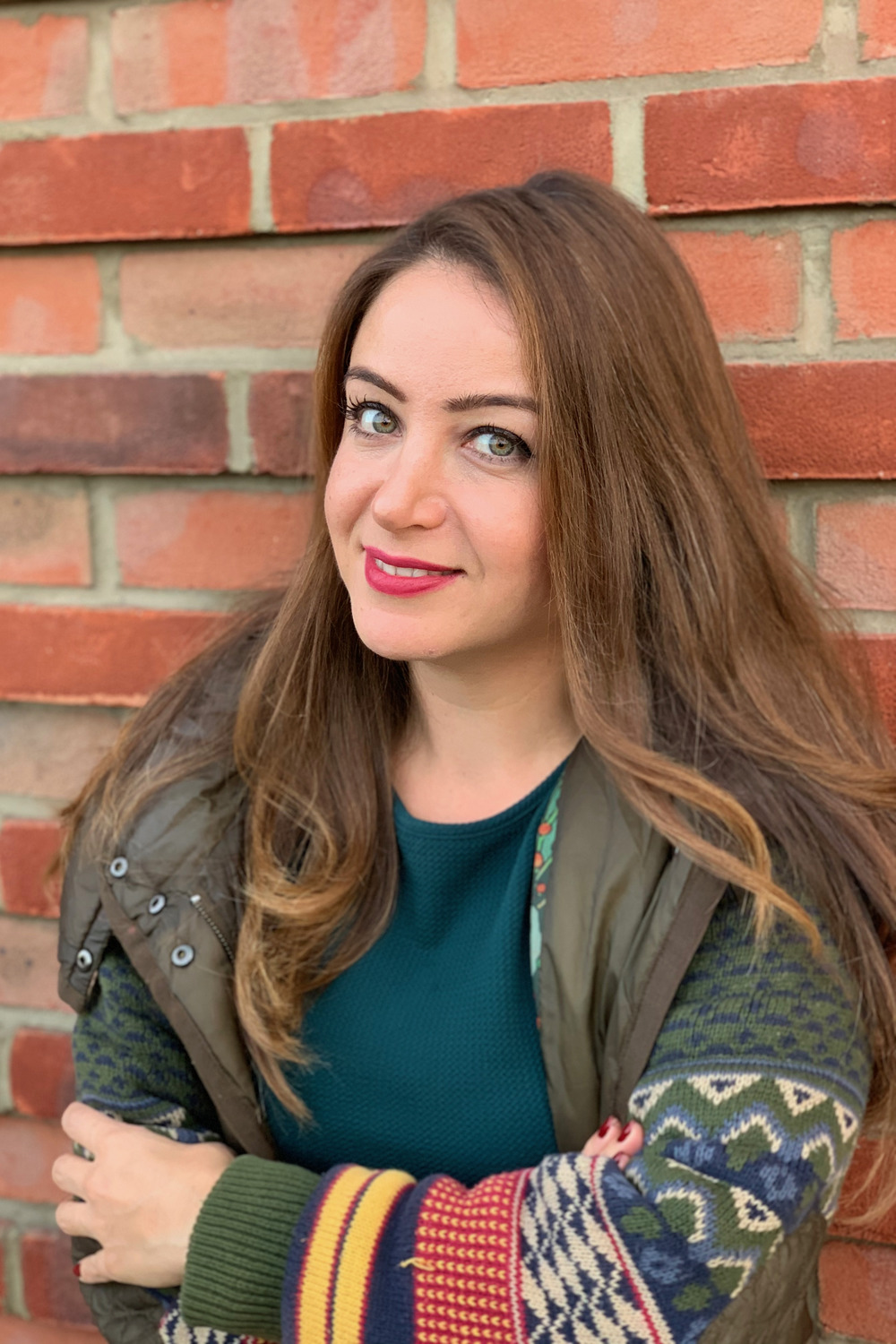
Zaina Erhaim, Member
Communications consultant and trainer
Ms. Erhaim is a Syrian journalist and freedom of expression advocate. She works as a communications consultant and trainer and, until recently, was communications manager for the Institute for War and Peace Reporting. Ms. Erhaim fled Syria in 2016 and was displaced in Turkey for two years before relocating to the UK where her claim for asylum has been accepted. She covered parts of the Syrian revolution for the BBC and has also published in The Economist, the Guardian and German newspaper Die Zeit; and directed and filmed short documentary films. When the Syrian revolution began, she participated in various efforts to help refugees, distribute aid, and provide psychological and other support to women. Ms. Erhaim studied journalism at the Faculty of Literature in Damascus and has a master’s degree in international journalism from City, University of London.
Our team
The New Humanitarian has staff from Boston to Bangkok, and from Denmark to Dakar. We have years of collective experience as experts in our field, covering humanitarian crises all over the world. Our staff are regularly asked to speak as experts at events organised by development organisations, governments, universities, civil society groups, private sector companies, and more. To enquire about having one of our team at your next event, please get to know our staff below and make your enquiry through this form. For all other enquiries, including requests for interviews, comments, and quotes, please email: [email protected]

Ebele Okobi, CEO
Ebele Okobi describes herself as a values-led, transformational leader who builds mission-driven teams and organizations bent upon shifting the arc of the moral universe towards justice. She is passionate about disrupting systems of harm and amplifying untold stories and unheard voices. Prior to joining TNH, she was a Venture Partner for Equity and Impact at Ada Ventures, built and led the Africa and Africa, Middle East & Turkey public policy teams at Facebook, was the Global Head of Human Rights at Yahoo, worked in brand at Nike EMEA, was an advisory services director at Catalyst in Amsterdam and the Bay Area, a health policy advocate at Consumers Union in San Francisco and a corporate lawyer at Davis Polk & Wardwell in New York, London and Paris. Ebele is a Trustee of the Young Vic theatre and a member of its Development Board, a Trustee of the Whitechapel Gallery, a Braemar Summit Committee Member, Chair of the Patron’s Board for John Akomfrah for the 2024 Venice Biennale UK Pavilion, a Chisenhale Gallery Council member, a Frieze 91 Committee member. Ebele also directs the Chinedu Valentine Okobi Sabbatical Program, which funds transformative rest for Black justice leaders in partnership with the California Black Freedom Fund and was created by the Okobi family in honor of her brother, murdered by police in 2018. Ebele attended the University of Southern California, Columbia Law School and HEC-Paris. She is married (twice!) to Richard Harris III, a documentary film maker. She is the mother of dragons.
📺 Watch her interview with fashion director and writer Kenya Hunt | On Sonia Boyce, Simone Leigh And Why The Venice Biennale Is A Win For Black Women | Framing the Future: The Women Shaking Up The Art World

Yasmine Kergoat, Chief of Staff
Yasmine Kergoat joined TNH in 2023. In her role, Yasmine provides administrative executive support to the CEO and management team; acts as board secretary for both the Swiss and US boards; supports strategic initiatives, and helped ensure a smooth transition to the new CEO in early 2024. Yasmine has a rich and varied background that includes research, data collection & analysis, project/programme management, donor reporting, and communications. Yasmine is a committed feminist passionate about gender equality and peace building. She has done consultancies with the WHO, the Oak Foundation, the Women’s International League for Peace and Freedom, Interpeace, Kvinna till Kvinna, RNW Media, Oxfam, among others, with a particular focus on gender, sexual and reproductive health and rights (SRHR) and the Middle East. She graduated with an MSc in International Health from KIT, the Royal Tropical Institute in the Netherlands and a BA in Anthropology from the American University in Cairo (AUC). Yasmine is of Egyptian/French origin and is fluent in Arabic, French and English. She was born and raised in Cairo, Egypt and is currently based in Geneva, Switzerland.

Elise Campbell-Bates, Chief People Officer
As a strategic and supportive people and talent leader with a track record in attracting and hiring the best talent, Elise helps build out The New Humanitarian team to fuel this next phase of growth for the organisation. Elise has led the design and implementation of large, high-level recruitment project plans at Amnesty International, and also managed all people experience, culture, and engagement initiatives at TouchNote, one of Europe's fastest growing tech companies. Elise’s most recent role was resourcing manager at Cundall, the world’s first engineering consultancy to be certified carbon neutral, focussed on designing energy efficient, sustainable buildings. She holds a BSc in sociology from Kingston University.
Editorial
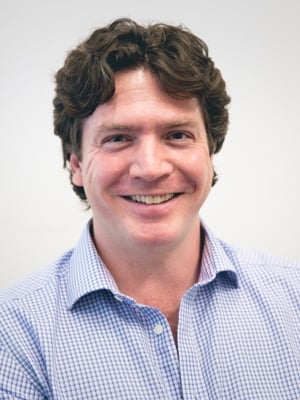
Andrew Gully, Managing Editor
Andrew joined The New Humanitarian in 2015. He is a journalist and editor whose 12-year career at Agence France-Presse took him from Paris to London to Hong Kong to Washington via short stints in Jakarta, Jerusalem, Moscow, Baghdad and Port-au-Prince. His final years at AFP were spent as Deputy Desk Chief for North America, running the editorial output for the Americas and covering Barack Obama’s 2012 re-election campaign.
Patrick Gathara, Senior Editor for Inclusive Storytelling
Patrick joined The New Humanitarian in May as our first Senior Editor for Inclusive Storytelling, working with us to lead the way in decolonising coverage of humanitarian crises. Patrick is known for his commentaries and cartoons published in Al Jazeera, The Star (Kenya), The Washington Post, and The Elephant. He was previously curator-in-chief of The Elephant, where he spent six years building out a newsroom, which included everything from establishing editorial policies, recruiting and mentoring journalists from around Africa, getting partnerships off the ground, and editing all types of content. As Senior Editor for Inclusive Storytelling, Patrick works to expand our networks of local contributors around the globe, while also spearheading a new programme for TNH journalism fellows. Patrick works across the newsroom – and the organization – to explore formats that challenge some of the Western-centric narrative habits of traditional journalism and that allow us and the communities we cover to more easily co-create content.
📺 Panel on when the West falls intro crises | Workshop on decolonised media
Whitney Patterson, Head of Audience and Product
Whitney heads our audience and product team – handling audio, visual, and web content – and audience engagement strategy to maximise the reach and impact of our journalism.
Sofia Kuan, Production Editor
Sofía Kuan is a Guatemalan-Taiwanese multimedia producer and project manager. Before joining The New Humanitarian team, she studied journalism in Taiwan and specialised in journalism and politics during her Master’s in Denmark and the Netherlands. She speaks Spanish, English, and Mandarin-Chinese.
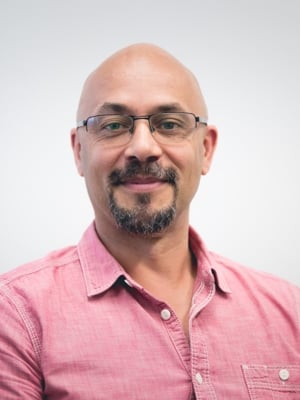
Obi Anyadike, Senior Africa Editor
Obi is an online journalist and editor, with extensive experience covering international development issues, Africa and the Global South. Obi began his career as a back-packing journalist writing for the Economist and other London-based African publications. He was the Zambia correspondent for Inter Press Service, chronicling the start of the multiparty wave in Anglophone Africa, and went on to cover the upheavals in Somalia and Ethiopia. He later worked as Africa Editor for IPS based in Zimbabwe, working with a team of young pioneers carving out space for progressive, independent media on the continent. A regular commentator on Boko Haram, Obi holds an MA in Peace and Conflict studies from the University of Notre Dame.
📺 Interview on Arise News on a secret programme to rehabilitate Boko Haram terrorists | What next after Nigeria’s presidential election | Guest speaker on Reporting from the Frontlines of Peace Podcast, for World Bank's Fragility Forum

Philip Kleinfeld, Correspondent and Editor, Africa
Philip joined The New Humanitarian in 2019 as a correspondent and editor. He is a multimedia reporter with extensive experience investigating conflict, human rights abuses and humanitarian crises across sub-Saharan Africa. He has covered rebellions in the Democratic Republic of Congo, militancy in Mali and Burkina Faso, and wars in Central African Republic, Congo-Brazzaville and beyond. A regular commentator in the media, he holds a Masters in Political and Legal Theory from University College London.
📺 Reporter's View: Philip Kleinfeld on 10 months reporting on the Sahel | Guest speaker on neglected crises for International Geneva Talks
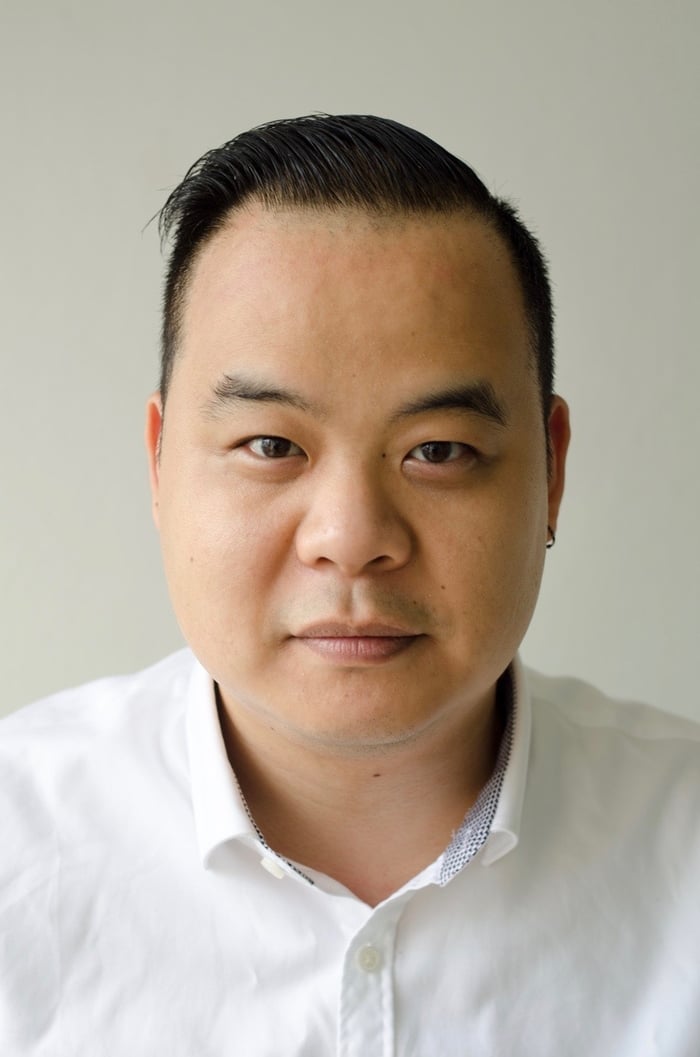
Irwin Loy, Senior Policy Editor
Irwin joined The New Humanitarian in 2017, covering stories from across Asia and the Pacific as Asia Editor, before becoming Policy Editor in 2022 and Senior Policy Editor in 2023. He is a multimedia journalist and editor who has lived and reported in Asia since 2009. Before coming to The New Humanitarian, he filed print, radio, and multimedia stories as a freelance correspondent and worked closely with local journalists from around the region. He started out in newspapers covering local and provincial politics in Canada. Irwin is also leading a reporting project exploring locally driven aid in humanitarian crises.
📺 Speaking on Covid-19 and fragility for Aid Talks | In conversation with Thin Lei Win on Myanmar, hunger, and more | Podcast episode on whether countries hit by climate change will finally get payouts at COP27
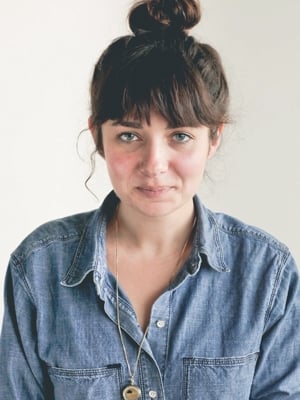
Annie Slemrod, Middle East Editor
Annie is a journalist and editor, covering the Middle East. From 2010-2013 she reported on Lebanon for Beirut’s The Daily Star, where she focused on Palestinian refugees. After leaving Beirut, she worked as freelancer for The New Humanitarian, The Independent, and The American Prospect. Annie holds a Masters in Near and Middle Eastern Studies from the School of Oriental and African Studies in London.
📺 In conversation with journalist Nabil Alawzari on the situation in Yemen | Behind the scenes on WhatsApp, Lebanon? | Guest spot on Al Jazeera's Start Here to talk about coronavirus and the world’s most vulnerable

Ali Latifi, Asia Editor
Ali Latifi recently relocated to Istanbul from Kabul, where he was born, before moving to California as a child. Since his career began in 2007, Ali has reported from Washington DC, Greece, Turkey, Qatar, and Afghanistan, among other locations. He has covered the struggles Afghan refugees face in Greece and Turkey since 2013. Ali has also written extensively on the Taliban in Doha and is a frequent commentator on Afghan issues for radio and television news. In Afghanistan, he has travelled across at least 15 of the country’s 34 provinces, where he has covered everything from drone strikes and civilian casualties to singing competitions and the cost of marriage in remote areas.
Jacob Goldberg, Staff Editor and Reporter, Investigations
Jacob is an award-winning journalist who has reported extensively on human rights abuses and humanitarian crises in Southeast Asia. He previously served as Managing Editor at Coconuts Yangon, where his coverage of Myanmar’s atrocities against the Rohingya received an award from the Society of Publishers in Asia in 2017. He later served as Editor-in-Chief at New Naratif, where he and a team of reporters based in Thailand and Cambodia received a Human Rights Media Award from Amnesty International Thailand in 2021 for an investigation into the unsolved disappearance of Thai activist Wanchalearm Satsaksit. He received a second award from the Society of Publishers in Asia in 2020 for a freelance investigation into sexual abuse in Myanmar’s nonprofit sector. Jacob’s work has appeared in The Guardian, Al Jazeera, VICE, and the Columbia Journalism Review, among other outlets. He has a degree in International Development from UCLA. He joined The New Humanitarian in 2022.

Will Worley, Staff Editor and Reporter, Policy
Will is The New Humanitarian's Staff Editor and Reporter for Policy. Prior to joining TNH, Will was Climate Correspondent at Devex, and before that covered UK aid policy. He was shortlisted for an award in 2021 for his reporting on the UK government's aid budget cuts and DFID merger. He also worked as a freelance journalist, internationally and for the UK national press.

Namukabo Werungah, Staff Editor and Reporter, Breaking News and Social
Namukabo Werungah is a trained journalist and communicator with a decade of experience in multimedia news production. Before joining TNH, she worked with the BBC, where she was part of the team that pioneered the first fact-checking television programme and a COVID-10 special programme. As the appointed BBC Storytelling Ambassador for Africa, she mentored and trained the youth in the art of storytelling techniques. Prior to the BBC, she worked at Nation Media Group, where, in her final days, she covered Kenya’s general election in the Nyanza region, a political hotspot in the country. She is a multi-award-winning journalist who was named Journalist of the Year in Kenya in 2023, as well as the pioneer of the Merck More Than a Mother Media Awards TV winner in 2017.

Marthe van der Wolf, Podcast Producer
Marthe is The New Humanitarian’s Podcast Producer. She covered the Horn of Africa region as a radio correspondent, followed by a stint reporting on the European Union. She worked as a humanitarian media adviser with Oxfam before moving to London. Prior to The New Humanitarian, she worked as a radio journalist and podcast producer with VOAnews, HuffPost, Vice, and more. Marthe holds a BA in Journalism and an MPhil in African Studies.
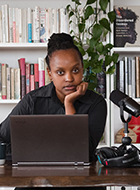
Melissa Fundira, Podcast Producer
Based in Toronto, Melissa is an award-winning journalist with 10 years’ experience in broadcasting. Most of her work has been with the Canadian Broadcasting Corporation, where she has co-produced national radio talk shows and podcasts. Melissa will be producing and co-hosting Season 4 of Rethinking Humanitarianism. She will also put together a new limited series that will bring together policymakers and people affected by their decisions, in a series of ongoing conversations.
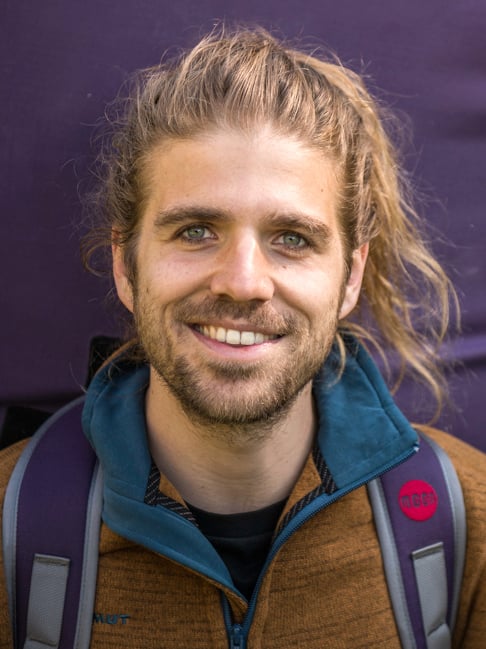
Marc Fehr, Web Developer
Marc is a full stack web developer with experience in digital storytelling, data visualisation, interaction and usability design. After graduating in 2011 from the University of Applied Sciences in Chur, Switzerland, he worked as an interactive news designer for the award winning ‘Interaktiv Team’ in one of Switzerland’s biggest newsrooms. Marc is currently based in Cape Town, South Africa, where he works remotely, occasionally returning to Europe to lecture at various Swiss universities. Marc was born in Switzerland and speaks German, English and French.
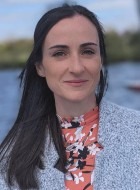
Ciara Lee, Multimedia Editor
Ciara Lee joined The New Humanitarian as Multimedia Editor after 13 years as a video journalist at Reuters. Ciara has a wealth of both field and desk-based experience in producing and designing stories to reach broadcast and digital audiences. Ciara leads efforts to further develop our multimedia offerings, and deepen our engagement with audiences across various channels and platforms.

Eric Reidy, Staff Editor and Reporter, migration and special coverage
Eric is an award-winning journalist who has reported extensively on migration in the Mediterranean and at the US-Mexico border. He started his career reporting on post-Arab Spring political developments in the Middle East and North Africa and has been writing for The New Humanitarian (then IRIN News) as a freelancer since 2017. He joined The New Humanitarian as Migration Editor-at-large in 2020 and became full-time staff in 2022. Eric received the 2021 Elizabeth Neuffer Award Gold Medal for his coverage of the COVID-19 pandemic’s impact on refugees, asylum seekers, and migrants. His work has also appeared in WIRED Magazine, The New Republic, Mother Jones, and The Nation, among other outlets.
📺 Migration, Mobility & Beirut | Conversation on the securitisation of Europe's borders for Wszystko co Najważniejsze | Speaking with the University of Pittsburgh about his career in journalism

Matt Crook, Staff Editor, Live Journalism and Outreach
Matt is a marketing and comms specialist with experience in journalism, nonprofits and startups. From the UK, Matt spent nearly 10 years in Southeast Asia, initially working as a journalist before transitioning into the nonprofit sector and taking a role at Plan International. Matt holds an MA in Southeast Asian Studies from SOAS and travelled extensively around Asia before returning to the UK to work at Plan’s global HQ. After productive stints at an environmental charity and a fintech startup, Matt now joins The New Humanitarian to lead on marketing strategy and help bring more people into the TNH circle.
Partnerships
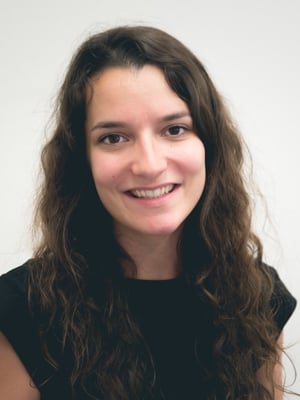
Emmeline Booth, External Relations Lead
Emmeline has been a part of TNH’s external relations team since 2016 and has played a key role in acquiring a pool of more than 20 donors. Her involvement has ranged from the development of bespoke pitches and proposals to being responsible for reporting back to donors, including tracking and communicating TNH’s impact against our theory of change. Emmeline joined TNH in 2015 as an editorial intern and was also briefly Editorial Assistant before making the switch to External Relations Officer. She became External Relations Lead in 2022. She graduated from City University with a degree in journalism and speaks English and French.

Jijo Vadukoot, External Relations Officer
Jijo Vadukoot joined The New Humanitarian as an External Relations Officer. He is supporting TNH’s efforts to expand its funding base including with private and institutional donors. He comes with an experience of 10 years, working with philanthropic foundations and fundraising for non-profits in India, including a stint as Major Donors Manager with Amnesty International India. Jijo holds an MA in Economics from University of Mumbai and BA in Economics from St. Xavier’s College, Mumbai. He speaks English, Hindi and Malayalam.
Operations

Aimee Wielechowski, Chief Operating Officer
Aimee Wielechowski is The New Humanitarian’s first Chief Operating Officer. She joined the team from the Danish Refugee Council, where she managed human resources for 8,600 staff working across its international operations. She has experience in safeguarding, accountability, change management, organisational design, and process optimisation. Aimee also led efforts to make DRC a more diverse, equitable, and inclusive workplace. Aimee has more than 25 years of experience working within the humanitarian sector, beginning her career in humanitarian coordination in countries affected by conflict. She has also served as a policy officer in humanitarian reform and as chief of strategic planning at the UN Office for the Coordination of Humanitarian Affairs (OCHA).

Jill Bolanos, Finance and Admin Manager
Jill has the experience and skills we need to navigate TNH through the transition from startup to scale-up, and to ensure we have the right financial policies and controls in place to meet donor expectations. Jill has 20+ years of experience working in finance. She is a Certified Public Accountant, and has an ACCA Diploma in International Financial Reporting Standards and brings a wealth of experience.

Antonia Tsiko, Operations and Admin Assistant
Antonia joined The New Humanitarian to support the Operations team with admin and finance tasks. She has a Bachelor in Economics and Management from the University of Geneva and has plans to further her studies in the future. Antonia has experience in administration, executive assistance, and project management. She is fluent in English, French, Greek, and Albanian.

Elisa Manuela, Finance Assistance
Elisa Manuela attended business school in Geneva, graduating as an accountant. She then worked for five years as an accountant at Piramedia Group, one of the largest call centres in Switzerland, before joining The New Humanitarian’s admin team to support on finance and admin tasks. Elisa speaks English, French, and her mother tongue, Lingala.
Annual Reports
The New Humanitarian’s Annual Reports provide a comprehensive update on our journalism in action, our achievements and growth, and, vitally, on our progress in driving more effective and accountable humanitarian action. A useful resource for ensuring transparency for current and potential donors, they also help to inform both new and regular readers about the scope and importance of our work. You can peruse everything from our editorial highlights to our financial statements by clicking on the links below.
- Annual Report 2022
- Annual Report 2021
- Annual Report 2020
- Annual Report 2019
- Annual Report 2018
- Annual Report 2017
- Annual Report 2016
Part of the United Nations until the end of 2014 and housed within the Overseas Development Institute during a transition to independence in 2015, Annual Reports for The New Humanitarian (formerly IRIN News) begin in 2016.
Our partners
Media
TNH partners with media organisations around the world to expand the reach of our important coverage of humanitarian issues. Find out more about syndicating TNH content and how to contact us here.
Current partners include:
The Guardian - Guardian Development Network
Los Angeles Times - Global Development Watch
Other media partnerships:

The New Humanitarian is a member of the Global Investigative Journalism Network, joining 182 other media organisations around the world that focus on investigative reporting.
Global Investigative Journalism Network
Operational
H2H The humanitarian sector must adapt and evolve to cope with the scale and nature of the humanitarian crises of today. The New Humanitarian is part of H2H, a vibrant network of humanitarian entrepreneurs who day by day are engineering new solutions and services that enable the humanitarian sector to perform better. H2H means ‘Humanitarian to Humanitarian’, a term inspired by the ‘Business to Business’ (B2B) concept in the private sector.
Overseas Development Institute (ODI) The Overseas Development Institute is a leading independent think tank on international development and humanitarian issues. ODI’s mission is to inspire and inform policy and practice which lead to the reduction of poverty, the alleviation of suffering and the achievement of sustainable livelihoods, by locking together high-quality applied research, practical policy advice and policy-focused dissemination and debate.
Sigma legal Sigma legal is a boutique law firm, based in Geneva, that provides legal counsel to for-profit and non-profit organisations (NGOs, foundations and international organisations) on corporate structuring, tax, regulatory aspects, contracts, governance, privileges & immunities, employment and immigration. Sigma legal also specialises in innovation law, including corporate finance, technologies and brands, as well as data protection and privacy.
Gervase de Wilde Gervase de Wilde is a barrister at 5RB, a leading set of barristers' chambers specialising in all aspects of media and communications law. Gervase converted to the law after working as a national newspaper journalist. He has a diverse practice advising and acting for both claimants and defendants, including the national and international media, in relation to the full range of media law disputes. His work primarily consists of litigation involving defamation, privacy, data protection, harassment, contempt, third party disclosure, and court reporting.
Advertising
The New Humanitarian is a recipient of a Google Ad Grants award. The Google Ad Grants program supports registered nonprofit organisations that share Google's philosophy of community service to help the world in areas such as science and technology, education, global public health, the environment, youth advocacy, and the arts. Google Ad Grants is an in-kind advertising program that awards free online advertising to nonprofits via Google AdWords.
Contact us
Brand assets
Download our logo: Logo with tagline | Transparent logo with tagline | White logo with tagline | Logo without tagline