
Youth are on the move. As technology has developed and the world has become a smaller place, young people are travelling more than ever in search of work, education, and health services.
According to the 2006 ‘State of the World’ population report published by the UN Population Fund (UNFPA), young people aged between 15 and 25 years constitute one third of the total international migration flow worldwide.
Add to this figure 25- to 29-year-olds, and the total amounts to half the overall migration flow.
While young people travel abroad in search of better opportunities and living conditions, there is a huge downside that is regularly reported in the press. Hundreds of lives have been lost or ruined as people leave their homelands in search of a better life in Europe or North America.
Europe’s newspapers carry regular stories of Africans washed up on the beaches of southern Europe, or downed at sea in overcrowded boats.
But despite these headlines, the migration continues.
Why move?
Young people leave their homelands for various reasons, but one of the biggest factors is overcrowding and lack of opportunity at home.
To begin with, many young people lack a good education. In Africa, just one person in 20 gets a university education, while in Europe, nearly seven people in 10 has a university background
It is a similar situation with employment. According to UN data, more than 20 percent of young people in sub-Saharan Africa are unemployed, while 90 percent of job opportunities in Africa and Latin America are low-paid with long hours and no job security
“Globally there is this great need for skilled workers, people who are willing and able to work. Today we see the aging populations in Europe and North America; the baby boomers are now coming to their retirement. So, in the global perspective, there is a great need for young skilled people,” said one humanitarian worker, reflecting on the opportunities available to young people.
The role of modern media
The introduction of the Internet into previously media-starved locations (e.g. refugee camps, urban slums), has created a double-edged sword.
While young people are now able to find out more about potential destination countries in the northern hemisphere, they are not necessarily able to access vital information that would warn them of the dangers of migrating north
This means that although they see the chance for a better life in the north, they do not learn that to get there and get a good job is very difficult. If they eventually make it to their destination country, they often end up working on the black market in poorly-paid jobs and with dreadful living conditions.
Labour migrants
According to figures from the International Organisation for Migration (IOM), more than 190 million people migrated in 2005 alone. Of this number, 35 to 40 million tried to enter Europe and North America illegally – half of them young people
European policy on immigrants does not fall in favour of the immigrant
While the 1995 Schengen agreement allows for the freedom of movement for European citizens across Europe’s borders, those very borders have remained closed to the great majority of non-Europeans trying to enter the zone. This imbalance gave birth to the term “Fortress Europe” – the fear that Europe will be flooded with needy immigrants
This fear overrides economic evidence to suggest that immigrants are a benefit to European and other developed countries
Labour analysts and economists claim that immigrants are needed to help build up the workforce of an ageing population in the West. This would mean that an influx of immigrants complements rather than threatens an existing workforce.
Politically, however, this is a problem.
Young immigrant workers are not encouraged by western governments, who keep immigration procedures tied up in red tape; and an “open door” policy is not a vote-winner. In the face of such opposition, young people have no choice other than to become illegal immigrants
According to one Italian diplomat: “In the majority of cases it is not a matter of legislation or rational economic choice. Immigration is a hugely sensitive political subject, and none of the governments in power can afford to treat it in any other way.”
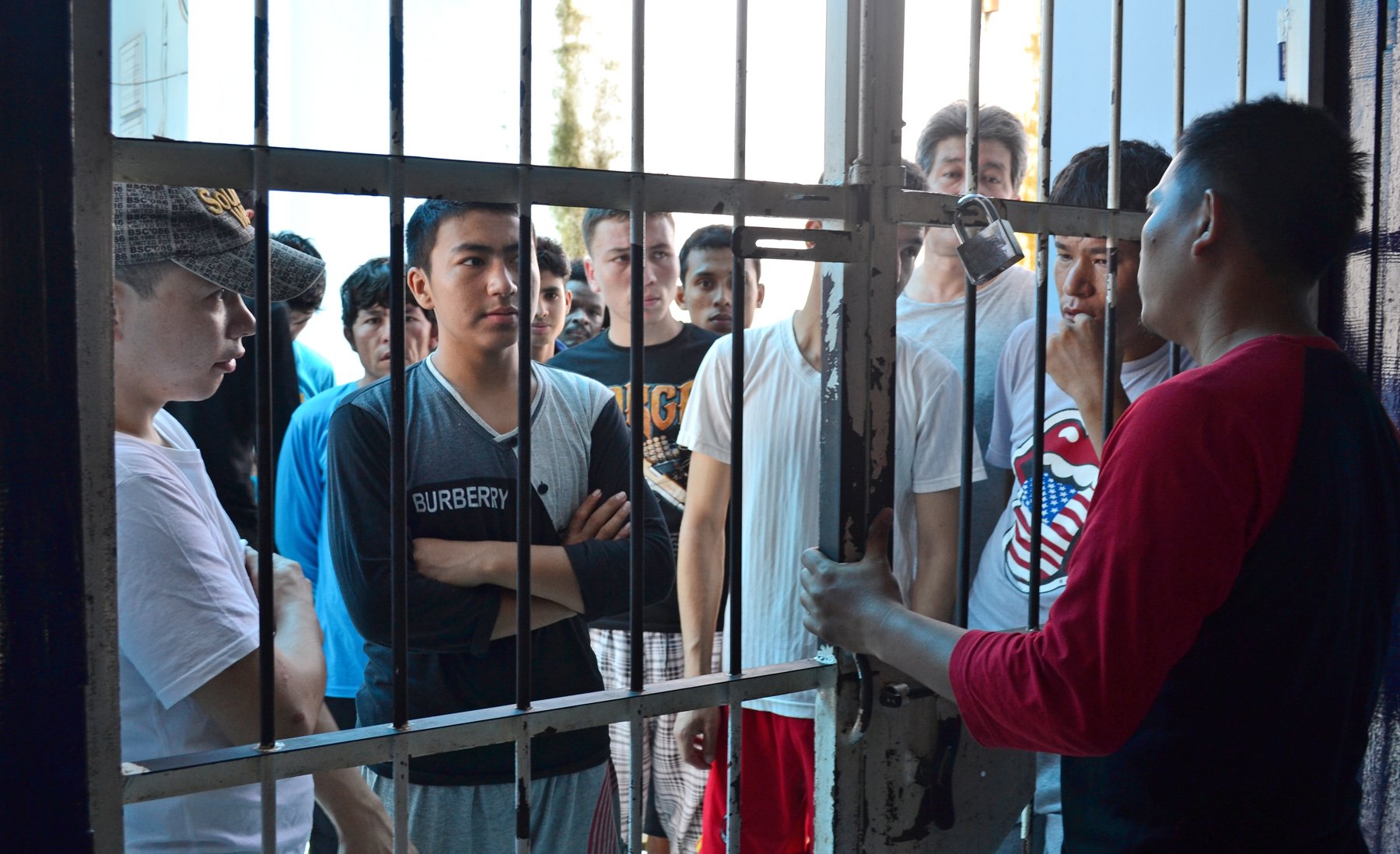
Illegal immigrants also face the possibility that their destination countries will detain them and forcibly return them to their home countries
One such example is Italy. According to Human Rights Watch (HRW), Italy has expelled more than 2,800 migrants since 2004, some whom were technically refugees fleeing violence in Darfur, Ethiopia and Eritrea; many of them young people
Spain is another European country experiencing regular inflows of illegal immigrants from Africa. According to the Spanish Red Cross, more than 1,000 people died off the coast of the Canary Islands in the first three months of 2006. Half of them were in their twenties; all of them had left Senegal in search of a better life
The trend now is for target countries to lay the responsibility of illegal immigrants on the countries of departure
This means that young people that have been returned to countries such as Morocco or Libya face human rights and physical abuse. Libya – which has never ratified the 1951 Refugee Convention – does not recognise asylum seekers
Eritrean migrant, Tesfai, described her ordeal in Libya to HRW: “They kicked us, beat us, for no reason. When we asked for something to eat, the border policemen showed us a truck full of rotten food that cats were living in and told us to eat that.”
“They hung me by a chain from the wall. There was a stick behind my knees, and my hands were tied to it. They hung me up on the wall. I stayed like that for 45 minutes. They were beating me during that time. They told me, ‘If we kill you, no one will know’,” recalled one sub-Saharan African migrant who had also been held in Libya.
Human trafficking
Young migrants face the greatest dangers when they become part of a human trafficking ring
Migrants are given false promises of a job in their destination country, but instead end up without documents, and are forced to work for the crime organisation that ‘kidnapped’ them. Many enter the sex industry; while many others, especially children, are used as slaves or for the illegal trade of human organs
According to the IOM Permanent Observer to the UN: “The stark reality for these most vulnerable migrants today is one of physical and psychological abuse, degrading treatment and work conditions, and unreported deaths and disappearances … These migrants remain largely unprotected and isolated from society because of their lack of documentation, their dependence on employers or traffickers, and their overriding fear of detention and deportation.”
Libya again comes under fire for perpetrating such crimes; with some of the country’s officials involved in smuggling operations, according to HRW
“It is all organised by the Libyan authorities, and in some cases there are Libyan brokers who collect the money in advance,” alleged Ephrem S., a 21-year-old student from Ethiopia
The US Department of State estimates that between 600,000 and 800,000 people are trafficked across international borders every year; around 80 percent are believed to be women and girls, and up to 71 percent are 14- to 25-year-olds. Exact figures are hard to come by due to the illicit nature of human trafficking.
Forced migration
There is more than one kind of migration
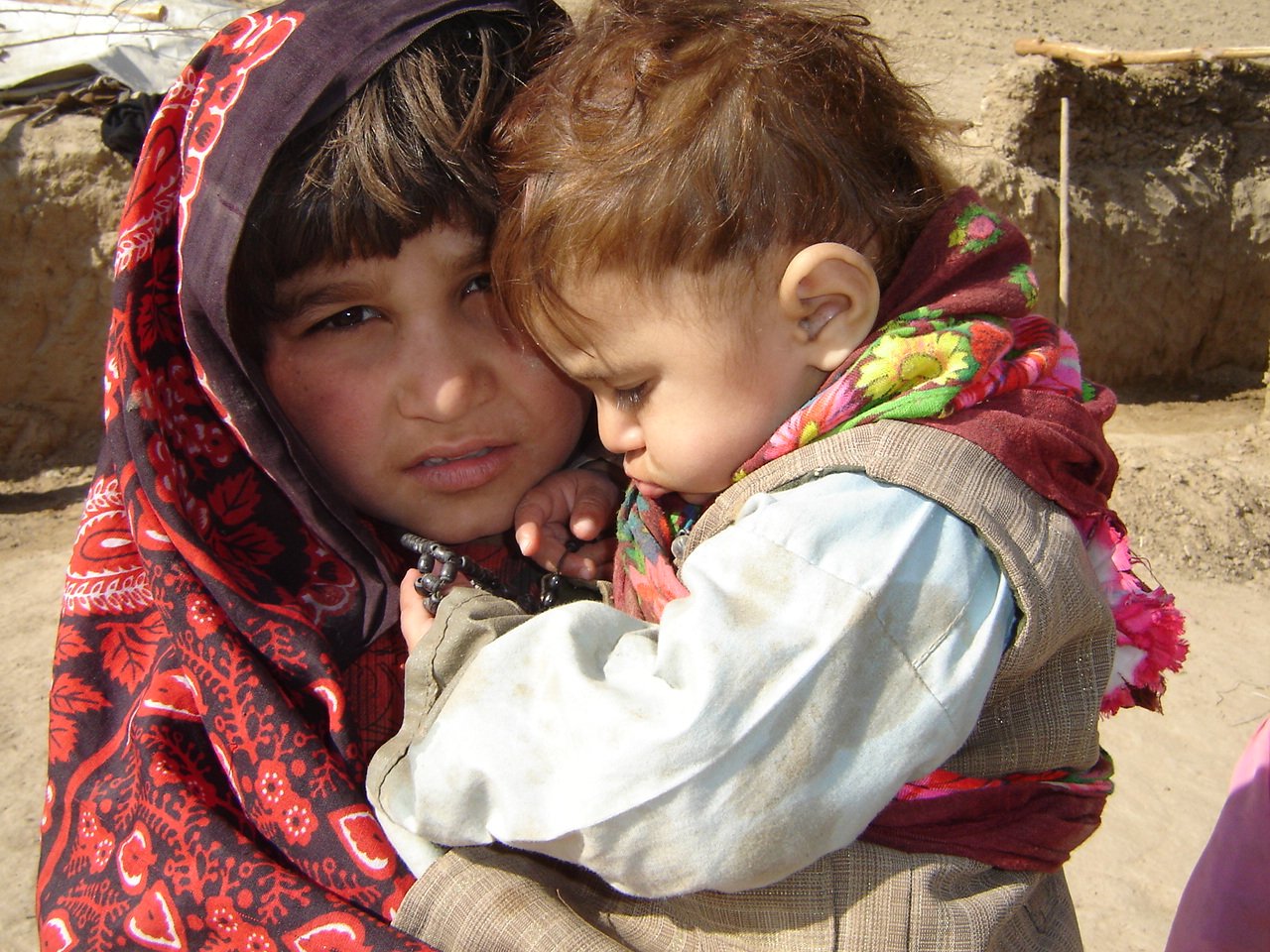
While there are young people who have chosen to leave their country in search of a better life, there are those who are forced to leave their homeland, fleeing war or famine
According to UNHCR, of the nearly 13 million refugees across the world, roughly half are under 18
Add to that the number of internally displaced persons (IDPs), not legally entitled to UNHCR protection because they remain inside their own countries, and the figure swells further
North Uganda alone accounts for nearly one million young IDPs, whose lives are wasting away in overcrowded camps
“What chances of future development has a community whose youth are without education and whose lives have been scarred by trauma, abuses and recruitment into armies?” asked the Jesuit Refugee Service in a recent report
Young people in IDP camps face their own unique kind of risk
A report by the Oxford Refugee Studies Centre claims that: “While they may not suffer death and disease to the same degree as young children, they are more susceptible to a wide range of immediate and long-term threats to personal safety.”
Due to their relative physical and mental maturity, young people are targeted by the armed militias or military service. This means they face armed combat. In North Uganda, up to 80 percent of the Lord’s Resistance Army is made up of abducted adolescents
Those fortunate enough to avoid being exploited are put to work to support their families. However, others – especially young girls – are treated as slaves or are forced to work in the sex trade (putting them at risk to sexually transmitted diseases)
Young people also receive less education and healthcare than younger children
“I left school in the fifth year of primary education because my family didn’t have enough money to pay for all of us going to school, and because I had a brother who stayed in school. Parents think that giving education to girls is useless and it is not worth the money,” said an 18-year-old female IDP.
More needs to be done to help adolescent IDPs. “Young people find themselves caught in a terrible limbo of exile where they can be alternately ignored, exploited or condemned to a life without hope,” said the UNHCR.
The agency believes that education will help draw young IDPs out of their state of despair; however, efforts have been focused on primary education, while teenagers and young adults remain illiterate
“We don’t know what we would like to be when we get older. We haven’t thought about it, because we haven’t been to school. If education were available, we would have had aspirations, but as things stand we will go back home and be farmers like our parents and grandparents,” said a group of young IDPs in one of North Uganda’s 200 camps
The lack of formal schooling and vocational training could spell disaster for these young people
“Their main activity has been to wait for the World Food Programme rations, how could they be prepared for the challenge of reconstruction and for participation in civil life?” commented an aid worker
Sometimes, however, those lucky enough to receive an education are made painfully aware of how their counterparts live in the West
Trapped in a situation of stalemate - at home, but not at home in their own countries - they become angry with the international organisations that care for them and the governments who they say have forgotten them.
The risk of recruitment
UNHCR has come under criticism for not doing enough to help young refugees, and critics are concerned that the only option for them will be to join an armed militia
Refugee camps have been the target of armed militia looking for a large pool of human resources since the Rwandan genocide. Some observers debate whether IDPs and refugees – who have families to support – ‘volunteer’ to join the militias. Often, they have no choice
IDPs, with their lack of identification documents, make ideal recruits for militias; their disappearance into combat roles easily goes unnoticed
This is the case with Colombia’s young IDPs, recruited by the rebels and paramilitary forces during the civil war
"If the state does not come up with responses to provide vulnerable children in rural areas with a real alternative, rather than just drug crops and the war, then we’re looking at a latent potential figure for recruitment of around two million," said UNICEF’s director in Colombia, Carel De Rooy
Meanwhile, in Africa, Sudanese refugees in Chad have been joining the ranks of Sudanese rebel groups
“They told me that Sudan was my fatherland; that I had to go and fight for it. I did not want to go, but I was afraid I would be beaten if I refused, so I followed them,” said one young Sudanese boy
It is not just coercion – but rhetoric - that forces young people to join militias
In Khan Younis refugee camp, in the Occupied Palestinian Territory, one 18-year-old fighter with the Al-Aqsa Martyrs Brigade told IRIN: “I wanted to defend Palestine against Israel’s attacks. I am not afraid – our lives are in the hands of God. We have one life and we will die once only. So we will die trying to liberate Palestine.”
The benefits of migration
According to IOM figures, in 2005 a total of US $167 billion was sent to developing countries by relatives working abroad. This supports the idea that international migration is economically beneficial for both the sending and receiving countries
The amount of money being transferred continues to rise. The World Bank reported that in 2004 $7.7 million went to sub-Saharan Africa alone. That figure is greater than the amount of Foreign Direct Investment, and represents the major source of foreign currency inflow after international aid
While there is a positive financial benefit to developing countries as a result of migration, there are also drawbacks; one such drawback is the ‘brain drain’.
Brain drain
While those from poor and impoverished backgrounds seek better opportunities abroad, the same goes for the more educated and skilled elite
The comparative abundance of prospects in the West lures skilled workers into jobs from which they seldom return. This means that there is a deficit of trained workers remaining in a country that needs a skilled working class; and that the departure of some of the brightest minds affects research and future development
The evidence lies in the figures. According to the UN Economic Commission for Africa, the continent lost 60,000 professionals (doctors, university lecturers, engineers etc.), between 1985 and 1990. The World Health Organisation meanwhile claims that that almost a quarter of doctors trained in 10 sub-Saharan Africa countries are now working in OECD countries. However, the World Bank points out that the number of highly-skilled workers going through official channels is far less than the number of unskilled and illegal immigrants crossing international borders.
The problems are not only economic.
There are fears for the future democratic development of the countries of origin. Young people traditionally keep many governments in check by raising awareness of rights issues through their student and youth organisations. These young people are vital for reforms to take place
Nation-building is also threatened, as those earmarked for resettlement in a third country tend to be better educated and skilled, and those who do return home are less able to help run their own country
“From a pure perspective of nation-building, I think that the resettlement campaign and the resettlement programme negatively effect the reconstruction of the state, because all the bright and able bodied individuals are the ones that are chosen to be resettled to a third country,” explained Mohammed Qazilbash, who works for CARE at Dadaab refugee camp, in northern Kenya
“The intelligent and the articulate are the ones that can present their case most eloquently to the resettlement officer and, as a result of their education, can defend and present their arguments in a more coherent and logical manner and thus be awarded with resettlement.”
The way ahead
The trend in migration is set to expand. However, in addition to the dangers of abuse and exploitation, there are some success stories
Young migrants – escaping troubles at home - have proved that they are ready to take on the challenges of new environments and cultures to help them better themselves and help their families. Migration has become a natural response by young people in times of crisis, and has helped them find a second chance at life
Migration has become an effective safety valve to avoid increased and intensified conflicts. If young people are allowed to move freely, and if their goals are supported, their countries of origin can be relieved of the pressures imposed by disillusioned youth, poverty and unemployment.
This article was produced by IRIN News while it was part of the United Nations Office for the Coordination of Humanitarian Affairs. Please send queries on copyright or liability to the UN. For more information: https://shop.un.org/rights-permissions


